
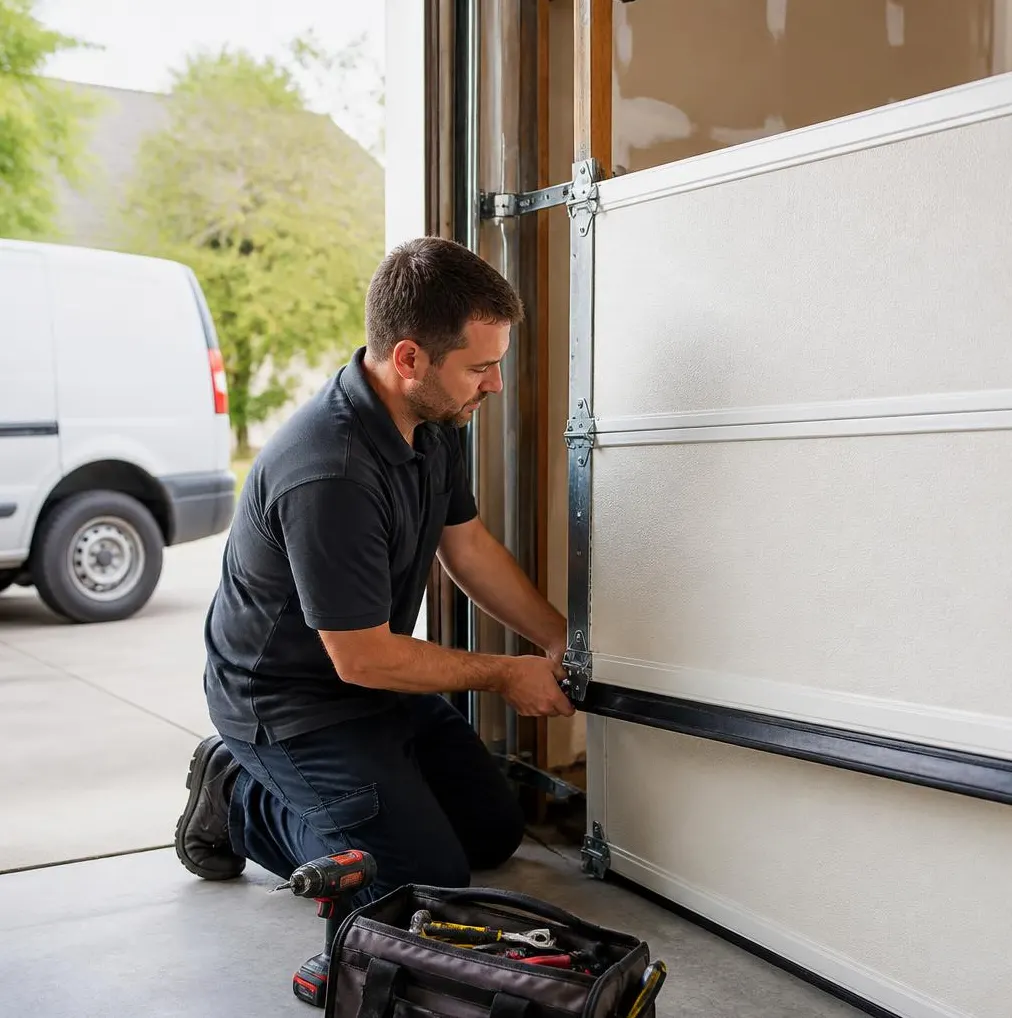
Rule of thumb: lubricate every moving metal part of your garage door twice a year with a silicone or white lithium spray, and nothing else. The exceptions matter, though — belt-drive openers need a different touch, nylon rollers shouldn't be greased at all, and anything involving the torsion spring system is off-limits for a homeowner no matter how squeaky it sounds.
Why the Wrong Lubricant Causes Problems Here
St. Louis puts garage door hardware through a lot. Winters bring ice, rock salt, and road grime that get tracked in and settle into hinges and tracks. Summers bring humidity that turns bare metal gummy with surface rust. A lubricant that attracts dust (like WD-40, which is a solvent and penetrant, not a true lubricant) or one that thickens and gets tacky in the cold (like heavy grease) will work against you in both seasons. The right product goes on clean, stays slick through temperature swings, and doesn't turn into a dirt magnet.
Tools and Supplies You'll Need
- Silicone-based garage door lubricant spray (widely available, roughly $8–$15 a can)
- White lithium grease, specifically for the opener's drive mechanism if it's a screw-drive unit
- A clean rag or shop towel
- A soft-bristle brush (an old toothbrush works) for dirt in the hinge knuckles
- A step stool or short ladder
- Safety glasses
What to Skip
- WD-40 — evaporates fast and leaves parts dry again within days
- Motor oil or 3-in-1 household oil — too thin, drips, and attracts grit
- Grease guns meant for automotive use — too heavy for door hardware and messy on tracks
- Any lubricant on the tracks themselves — tracks should be clean and dry; rollers need the lube, not the channel they ride in
Step-by-Step: Lubricating Your Garage Door
- Disconnect the opener. Pull the manual release cord so you can move the door by hand without the motor engaging. This also lets you feel where the door binds or sticks.
- Open the door fully and wipe down the tracks. Use a dry rag to clear dust, cobwebs, and any dried salt residue from winter driving. Do not spray lubricant in the tracks — a slick track can cause the rollers to slip.
- Spray the hinges. Apply silicone lubricant directly to each hinge where the panels meet, working it into the pivot point. Open and close the door a few times to let it work into the joint.
- Lubricate the rollers — carefully. If you have steel roller wheels, spray the bearings at the center, not the wheel surface. If you have nylon rollers (common on quieter, newer setups), skip lubrication on the wheel itself; they're self-lubricating and oil just collects grime on them.
- Coat the armbar and the hinge connecting it to the opener's trolley. This joint flexes every time the door opens and is easy to forget.
- Treat the lock mechanism if your door has one. A light spray in the keyhole and along the sliding bolt keeps it from seizing after a hard freeze.
- Match the lubricant to your opener type. For a chain-drive opener, a light coat of white lithium grease on the chain is enough. For a belt-drive opener, use nothing — belts are designed to run dry, and oil will degrade the rubber over time. For a screw-drive opener, apply white lithium grease along the length of the threaded rod.
- Wipe off excess. Any lubricant left sitting on the surface just becomes a dust and pollen trap, especially once the humid stretch of the year arrives.
- Reconnect the opener and run the door through a full cycle. Listen for any remaining grinding or squeaking — a sound that persists after lubrication usually points to a worn part, not a dry one.
Where DIY Should Stop
Lubrication is one of the few garage door jobs that's genuinely safe and reasonable for a homeowner to handle alone, start to finish. But a few related issues should not be — not because they're difficult, but because the consequences of getting them wrong are serious.
- Torsion springs are under extreme tension and store enough energy to cause real injury if they shift while you're near them. If a spring looks rusted, stretched, or is making a popping sound, leave it alone and call for a professional look.
- Lift cables fraying or looking frayed at the drum should never be handled by hand — a cable giving way under load can snap back violently.
- Persistent grinding from the opener's gear or motor even after proper lubrication often means an internal part is worn out, not dirty, and opening the unit yourself can void a warranty.
When to Call St. Louis Garage Door Experts
If you've lubricated everything correctly and the door still groans, drags, or reverses unexpectedly, that's usually a sign of a mechanical issue rather than a maintenance one. Our Garage Door Maintenance visits include a full inspection of springs, cables, and opener components that go beyond what's safe for a homeowner to check alone, and if a spring is on its way out, our Spring Replacement service gets it swapped safely before it fails on you in the middle of a cold snap or a storm-season power outage.
If your garage door needs more than a can of lubricant, give St. Louis Garage Door Experts a call. We serve homeowners across St. Louis, University City, Clayton, Florissant, Ferguson, Maplewood, Overland, and Jennings, and we're ready to help with same-day service when something won't wait.