
The Noise You Can't Un-Hear
It usually starts the same way. You hit the button, the door starts up, and somewhere between the floor and the ceiling you hear it — a rattle, a grind, a metallic bang that wasn't there last month. Maybe it happens every time now. Maybe it's worse on cold mornings when the garage is still holding onto that overnight chill. Either way, once you notice it, you can't un-hear it, and every trip out to the car becomes a little dreaded.
The good news: most noisy openers aren't broken, they're just loose, dry, or worn in predictable ways. Here's how to work through the problem methodically, starting with the cheapest fixes first.
Tools You'll Need
- Socket wrench set
- Adjustable wrench
- Garage door lubricant (silicone or lithium-based, not WD-40 or motor oil)
- Step ladder
- Flashlight
- Rag or shop towel
- Work gloves
Step 1: Figure Out What Kind of Noise You're Hearing
Before you touch anything, run the door up and down once or twice and just listen.
- Rattling or banging: usually loose hardware — hinges, brackets, or the opener's mounting bolts shaking against the ceiling.
- Grinding or squealing: almost always rollers or hinges that need lubrication, or rollers that are worn out.
- A loud bang at one point in the cycle: can mean a loose cable drum, a section of track pulling away from the wall, or in worse cases a spring issue.
- A steady rumbling that travels through the house: often the opener itself vibrating against the ceiling, especially with older chain-drive units.
Matching the sound to the cause saves you from lubricating something that was actually loose, or tightening something that just needed grease.
Step 2: Tighten Every Bolt You Can Reach
With the door closed and the opener unplugged, walk the track from top to bottom with a socket wrench. Check:
- The brackets holding the track to the wall and ceiling
- The hinges between door panels
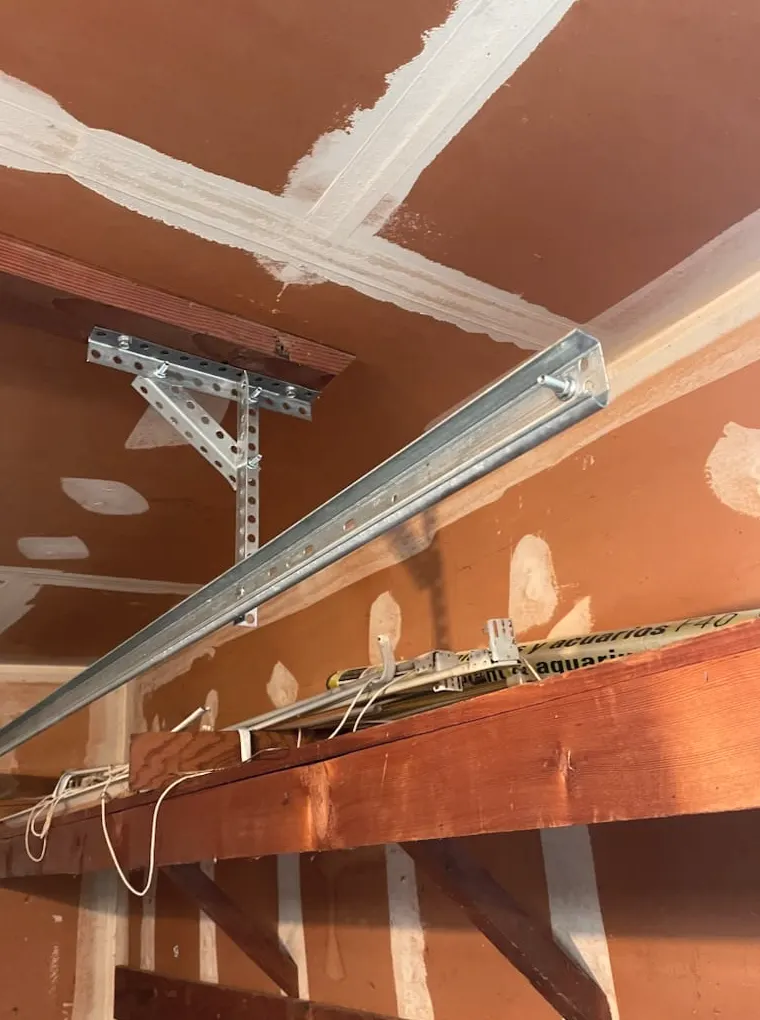
- The bolts on the opener's motor unit and mounting rail
Garage doors flex every time they cycle, and in a home that goes through big seasonal temperature swings — baking summers, freezing winters — metal brackets and fasteners work themselves loose faster than you'd expect. A quarter-turn on a dozen bolts often quiets a door dramatically.
Step 3: Lubricate the Moving Parts
Once everything is snug, lubricate:
- Hinges
- Rollers (the bearings, not the wheel surface if they're nylon)
- The torsion spring
- The opener's drive chain or screw rail
Use a garage-door-specific lubricant, not a household oil or WD-40, which attracts dust and grit and actually makes grinding worse over time. In winter, road salt and slush track into the garage on tires and boots; that grit works into hinges and rollers and turns a quiet door squeaky fast. A few minutes with the right lubricant every season keeps that from building up.
Step 4: Inspect the Rollers
Shine a flashlight on each roller as the door moves slowly (or manually, with the opener disconnected). Look for:
- Flat spots or cracks
- Rollers that wobble in their track
- Metal rollers with worn bearings (these are usually the noisiest)
If a roller or two looks rough, you can often swap them yourself — this is a reasonable DIY job. But if several rollers are worn, or the track itself looks bent or pulled away from the frame, that's a job for a technician. Forcing a damaged track back into alignment yourself risks the door jumping track entirely.
Step 5: Check the Opener's Isolation
If the noise seems to come from the motor unit itself — a hum or rattle that travels into the house above the garage — the opener may be bolted directly to solid framing with no cushioning. A rubber isolation kit between the opener's mounting bracket and the ceiling joist absorbs vibration before it transfers into the house. This is a simple, inexpensive upgrade most homeowners can install in under an hour.
Step 6: Decide If It's Time for a Belt-Drive Swap
If you've tightened, lubricated, and isolated everything and the opener is still loud, the issue may be the opener itself. Chain-drive openers are reliable but inherently noisy — metal chain on metal gear, every cycle, for years. A belt-drive opener replaces that chain with a reinforced rubber belt, cutting noise dramatically. It's a worthwhile upgrade for garages below bedrooms, or attached garages where every door cycle is audible inside the house.
This is where we'd draw the line on DIY. Swapping an opener involves disconnecting and remounting the drive rail, rewiring safety sensors, and properly tensioning the new system — mistakes here can affect the auto-reverse safety feature, which isn't something to get wrong.
When to Call St. Louis Garage Door Experts
If you've worked through these steps and the door still grinds, bangs, or rattles — or if you've found a bent track, worn-out rollers across the board, or a spring that looks stretched or uneven — it's time to call in a technician rather than keep troubleshooting. St. Louis Garage Door Experts handles everything from a straightforward roller replacement to a full garage door opener repair and installation, including belt-drive upgrades for homeowners ready to trade noise for quiet. We'll diagnose the actual source of the sound, not just treat the symptom, and make sure the safety features are working correctly before we leave.
Ready for a Quiet Garage Again?
If your garage door has gotten louder than it used to be, don't wait for it to get worse. Call St. Louis Garage Door Experts for same-day service across the St. Louis metro area, and let's get your door running the way it should.