
Rule of thumb: a little surface rust or minor swelling on a garage door is normal cosmetic wear, not proof the door is failing — unless the rust is spreading into the metal itself, the wood has gone soft, or the door's movement is actually affected.
That's the short version for whoever's trying to win this argument without reading six paragraphs. Here's the longer version, because "it's fine" and "it's ruined" are both oversimplifications.
What's Normal: Surface Rust on Steel Doors
Most residential garage doors are steel, and steel panels get small rust freckles over time — especially near the bottom edge, around hinges, and anywhere the factory paint got nicked by a bike pedal, a snow shovel, or a stray rock from the mower. This kind of rust sits on top of the paint and hasn't eaten into the metal yet. It's annoying to look at, but it's not structural, and it's genuinely common on doors that are five, ten, fifteen years old.
You'll know it's still in the "normal" category if:
- The rust is a stain or discoloration, not a hole or a flaky crater
- It's confined to a scratch, a seam, or a hardware point, not spreading across a whole panel
- The door still opens, closes, and seals the same as always
What's Normal: Minor Swelling on Wood Doors
Wood garage doors and wood-trimmed carriage-style doors absorb some moisture no matter how well they're sealed. A little swelling at the bottom corners, or a panel that sticks slightly on a humid August afternoon and loosens up again in October, is just wood doing what wood does. If you press on it and it's still firm, that's cosmetic.
The Exceptions: When It's Actually a Problem
This is the part worth sending to whichever spouse is arguing "it's totally fine":
- Rust that flakes off in chunks or has eaten a visible pit or hole. That's not surface rust anymore — the metal is compromised, and it will keep spreading from that spot.
- A steel panel that feels soft, bubbled, or crunchy. Many steel doors have a foam insulation core sandwiched between two steel skins. If moisture gets behind the outer skin, the foam can trap it against the metal and rust it from the inside out — you won't see this until the panel is bulging or the paint is blistering from behind.
- Wood that's soft, spongy, or dark and swollen at the base year-round, not just in summer. That usually means water is sitting against the wood constantly, not just raising the humidity around it.
- A door that's visibly warped, sags on one side, or has started binding in the tracks. Swelling that changes the door's shape is a mechanical problem, not just a looks problem — it stresses the opener, the rollers, and the springs.
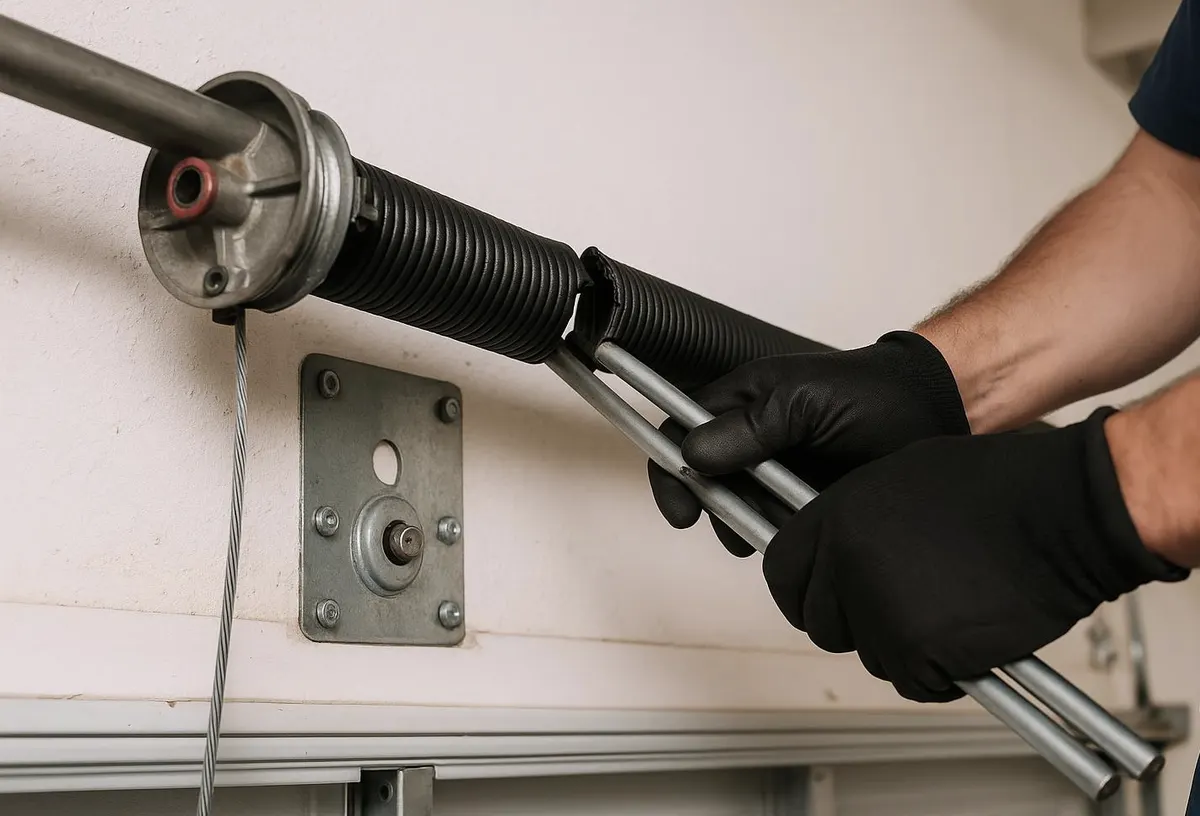
- Rust on springs, cables, or hinges. Rust on the panel is cosmetic; rust on the parts under tension is a safety issue. A corroded spring or frayed, rusted cable can fail suddenly.
Why This Shows Up Worse Here
St. Louis weather doesn't do a door any favors. Humid summers keep wood and steel seams damp for weeks at a time, which is exactly the environment rust and swelling need to get started. Then winter brings ice, snow, and the salt that gets tracked off streets and driveways — that salt is far more corrosive to steel than plain water, and it tends to collect right at the bottom panel and the hardware closest to the ground, which is why that's usually where the rust shows up first. Add in spring storm season dumping heavy rain against an exterior-facing door, and you've got a door that's dealing with moisture exposure almost year-round instead of just a few weeks a year.
None of that means your door is doomed. It means a door here needs a bit more routine attention than the same door would in a drier, milder climate.
What to Actually Do About It
- Sand and repaint small rust spots before they spread. A wire brush, some rust-converting primer, and exterior paint matched to the panel will stop a scratch from becoming a hole.
- Keep gutters and downspouts directing water away from the door, not onto it. A lot of "mystery" water damage at the bottom corners is just a downspout dumping straight onto the threshold.
- Check and replace the bottom weatherstripping seal when it's cracked or flattened. That seal is doing most of the work keeping splash-back and slush off the actual door panel.
- Wipe salt residue off the bottom few feet of the door after winter storms instead of letting it sit until spring.
- Reseal wood doors annually with an exterior-grade sealant or paint, paying extra attention to the bottom edge and any exposed end grain.
When to Call St. Louis Garage Door Experts
If the rust has gone past surface level, a panel feels soft or bulged, or the door is binding, sagging, or sticking in a way that didn't happen last year, that's past the DIY-touch-up stage. We can assess whether it's a cosmetic fix or a sign the panel, hinges, or hardware need replacing — and if rust has reached a spring or cable, that's a same-day garage door repair call, not a wait-and-see situation. For doors that are showing their age across the board, we also handle full garage door installation with materials better suited to our humidity and winter salt exposure.
If you're in St. Louis, University City, Clayton, Florissant, Ferguson, Maplewood, Overland, or Jennings and you're not sure which side of this argument is right, send us a photo or give us a call — St. Louis Garage Door Experts offers same-day service across the metro and can tell you in a few minutes whether you're looking at a touch-up or a repair.