
What Happens If You Wait Until Spring
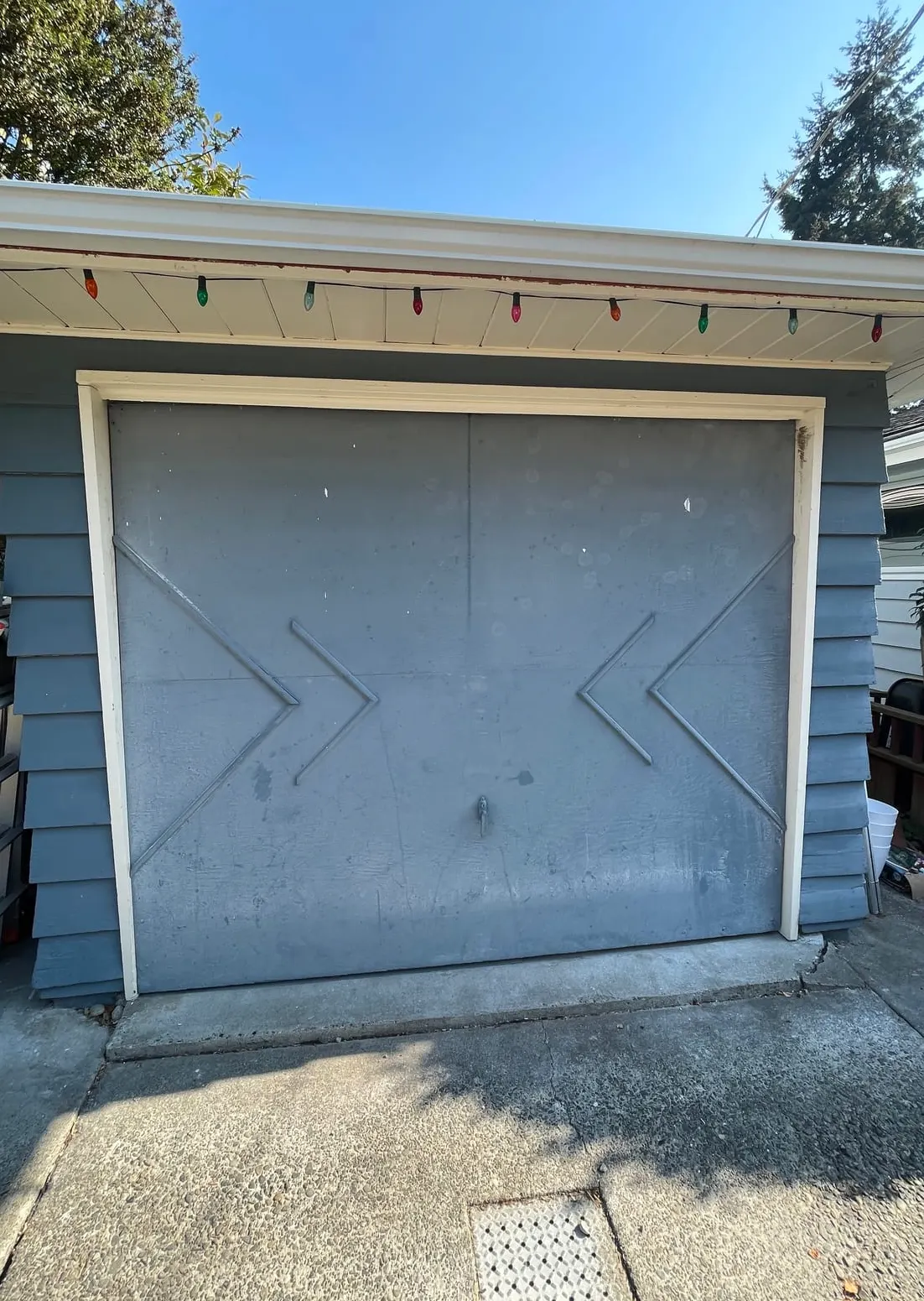
A cracked or caved-in panel looks like a cosmetic problem, but it's a structural one the first time the temperature drops below freezing. Garage doors in this area go through repeated freeze-thaw cycles all winter, and road salt tracked in on tires works into any crack or seam. A damaged panel flexes more than the rest of the door with every open and close, which stresses the hinges and rollers next to it. Leave it through one more cold season and you're not just looking at a dent anymore — you're looking at a warped section that no longer seals, a hinge pulling loose from thin metal, or a door that's visibly racking in its tracks. What would have been a single-panel fix in November can turn into a full replacement by March, plus a higher energy bill the whole time because warm garage air is leaking out around the gap.
Panel Replacement vs. Whole Door Replacement
Single Panel Replacement
- Cost: Generally a few hundred dollars, since you're paying for one section plus labor, not an entire door system.
- Timeline: Often same-day or next-day if the panel is in stock; otherwise it may need to be special-ordered to match your door's style and color.
- Appearance: Works well on newer doors where the manufacturer still makes a matching panel. On older or discontinued models, the replacement panel can be a slightly different shade or texture, especially after a few years of sun fading on the original.
- Insulation: If your door is insulated, a new panel will usually match the R-value of the rest of the door, so you're not losing efficiency.
- Best for: Doors under 8–10 years old with one isolated impact — a backed-into panel, a hail strike, a basketball mishap — where the rest of the door, springs, and opener are in good working order.
Full Door Replacement
- Cost: A bigger upfront investment, typically running from the low thousands into higher ranges depending on size, material, and insulation level, since you're replacing panels, tracks, and hardware as a matched set.
- Timeline: Usually scheduled rather than same-day, since the door is built or ordered to your garage's exact opening.
- Appearance: Everything matches, with no color or texture mismatch, and you get to choose a style and insulation package that fits the house.
- Insulation: A real opportunity to upgrade. Older doors from before double- and triple-layer construction was standard let in a lot of cold air and condensation; a new door can cut that down significantly, which matters given how much temperature swing a garage sees here between a humid July and an icy January.
- Best for: Doors over 10–15 years old, doors with damage to multiple panels or to the track and hardware together, or doors where rust and moisture damage (not just one dent) have been spreading for a while.
The Trade-Offs Nobody Mentions
A single panel swap is the cheaper, faster fix, but it's a patch on an aging system. If your springs, rollers, or opener are already worn, you'll likely be back for another repair within a year or two, and at that point you've paid for a panel and a door. On the other hand, replacing the whole door when only one panel is damaged and everything else is sound is spending money you don't need to spend yet — especially on a steel sectional door, which is built to be repaired piece by piece.
There's also a resale consideration. A mismatched panel is the kind of thing a home inspector or a sharp-eyed buyer notices. If you're planning to sell within the next couple of years, a visibly different panel on an otherwise clean exterior can be a bigger red flag to a buyer than its actual cost to fix.
What Makes Sense for Most Homes Here
For the typical home in this area — a door that's seen a decade or so of hot, humid summers and salted winter driveways — a single-panel replacement is usually the right call if the damage is truly isolated and the door is otherwise healthy. Have a technician check the balance, springs, and tracks at the same time; if those are fine, the panel swap will hold up fine too. If the door is older, already shows rust along the bottom panels, or the damage involves more than one section, put the money toward a new door instead of extending the life of a system that's already working against you.
When to Call St. Louis Garage Door Experts
If you're not sure which side of that line your door falls on, that's exactly the call to make before winter settles in for good. We'll inspect the panel damage along with the springs, tracks, and opener, and give you a straight answer on whether a Garage Door Repair will hold up or whether it's time for a Garage Door Installation that solves the problem for good. We carry matching panels for most common door styles and can source others quickly, so you're not stuck choosing a full replacement just because a panel isn't on the shelf.
If you're in St. Louis, University City, Clayton, Florissant, Ferguson, Maplewood, Overland, or Jennings and you've got a damaged panel staring at you every time you pull into the driveway, call St. Louis Garage Door Experts for a straightforward inspection and a same-day estimate before the next freeze makes the decision for you.