
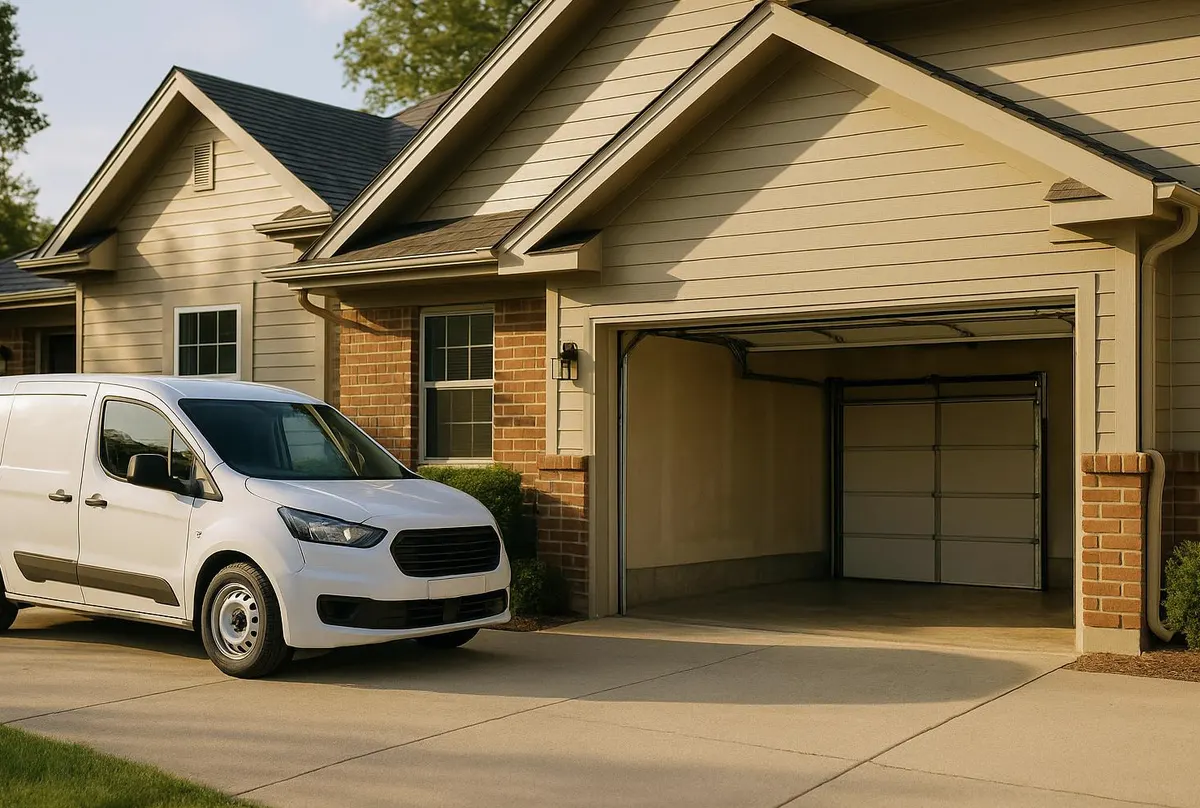
What a Technician Sees on These Calls
Late October through December, the service calls start to sound the same. A homeowner says the door worked fine all summer, but now it groans going up, sticks halfway, or the opener strains and reverses for no reason. Nine times out of ten, it's not one big failure — it's a handful of small things that cold weather, road salt, and humidity swings expose all at once. A garage door that was ignored all summer gets found out the first week temperatures drop into the 30s.
Why St. Louis Winters Are Rough on Garage Doors
The metro area goes from humid summers to icy, salted winters with not much gentle transition in between. That swing matters for a garage door. Metal contracts in the cold, which changes spring tension and can make a properly balanced door suddenly feel heavy. Moisture that gets into rollers and hinges during fall rain can freeze overnight, making parts stiff or noisy. And every car that pulls into the garage after driving on salted roads brings brine and grit with it, which settles into the tracks and starts corroding metal that isn't wiped down.
Check the Weatherstripping and Bottom Seal
Walk out and look at the rubber seal along the bottom of the door and the stripping around the sides. If it's cracked, flattened, or pulling away, cold air, melted snow, and small pests will find their way in. A new bottom seal is a cheap fix compared to a frozen puddle forming under the door or mice setting up shop for winter.
Lubricate the Moving Parts Before It Gets Cold
Rollers, hinges, and the track itself all need a light coat of a silicone-based garage door lubricant — not WD-40, which is a degreaser and burns off quickly. Grease that's already gummy or dirty will only get stiffer as temperatures drop, which is a common reason doors start grinding or moving unevenly on one side once winter sets in.
Listen for These Warning Signs
- A grinding or popping sound when the door opens
- The door feels noticeably heavier to lift by hand than it did in summer
- Uneven movement, where one side seems to drag or lag behind the other
- The opener strains, stalls, or reverses partway through a cycle
Any of these can point to a spring that's losing tension or a track that's out of alignment, and cold weather tends to make both worse, not better.
Torsion Springs Take the Cold Hard
Torsion springs are under constant tension, and cold metal is more brittle than warm metal. A spring that was already near the end of its lifespan is far more likely to snap during a cold snap than in July. If a door suddenly feels heavy, drops unevenly, or you hear a loud bang from the garage on a cold morning, that's often a spring that's given out. This is not a DIY repair — the tension involved can cause serious injury.
Clear Salt and Grime Out of the Tracks
Once the salt trucks are out, every trip into the garage tracks in a little brine and grit. It builds up in the tracks and rollers, and over weeks it can cause real corrosion. Wiping down the tracks with a damp cloth every few weeks through winter, then drying them, keeps that buildup from eating into the metal or gumming up smooth operation.
Test the Opener and Safety Sensors
Cold weather can shift sensor alignment slightly or cause condensation to form on the photo-eye lenses, which makes the door refuse to close or reverse unexpectedly. Wipe the sensor eyes clean, confirm they're pointed directly at each other, and test the auto-reverse function by placing an object in the door's path. If you've got a battery backup on the opener, check it now — cold reduces battery performance, and a dead backup during a power outage with ice on the roads is not when you want to find out.
Consider Insulation If the Garage Connects to Living Space
In homes where the garage shares a wall with the house, an uninsulated door means more temperature swing inside, which can mean higher heating costs and a greater risk of a frozen pipe along that shared wall. Insulated door panels or an insulation kit added to an existing door are worth considering if you've noticed that room running cold every winter.
When to Call St. Louis Garage Door Experts
If your door feels heavy, makes new noises, or the opener is struggling, don't wait for it to fail on the coldest morning of the year. Our techs handle spring replacement safely with the right tools and tension equipment, and our garage door maintenance service covers a full inspection of springs, rollers, tracks, and opener sensors so small issues get caught before winter turns them into a stuck or broken door. We work throughout St. Louis, University City, Clayton, Florissant, Ferguson, Maplewood, Overland, and Jennings, with same-day service available when something breaks unexpectedly.
Call St. Louis Garage Door Experts today to get your garage door ready for winter before the first hard freeze hits St. Louis, MO.